Bench Hardware ~ HP ZBook
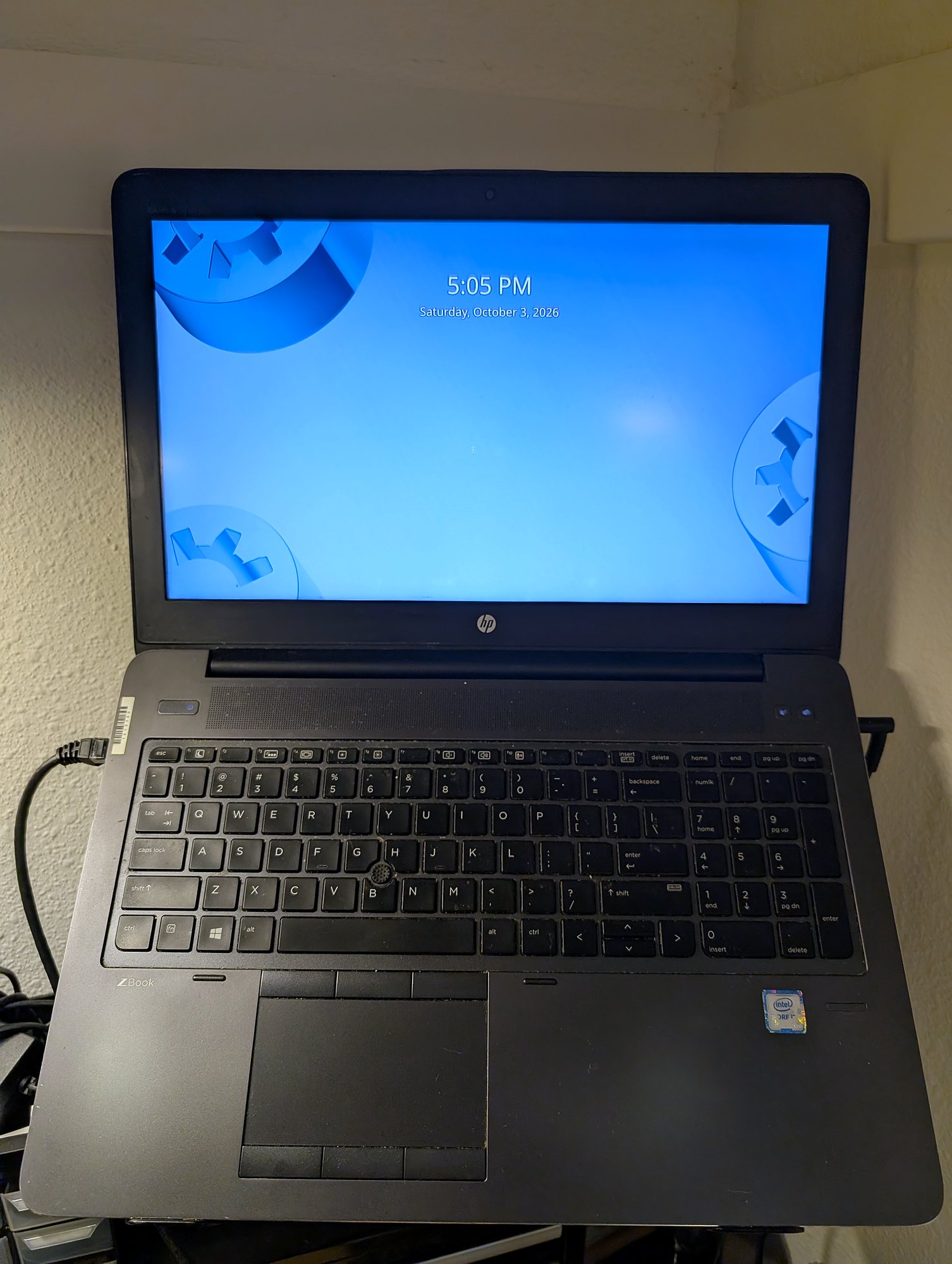
During freshman undergrad at MSOE, each engineering student was issued a laptop. My first one came in 2014. Junior year we were offered a new refreshed system, which we could keep upon graduation, and I received this one in 2016 (ten years ago as of writing this post!).
Grad school
I proceeded to use this same laptop throughout grad school as my day-to-day machine. I used to run VirtualBox with a VM for ROS development. Later, once WSL was more stable with ROS, I started using that. It was also the dev machine at my desk for the COVID-19 laptop server rack.
Lab computer
This laptop served me well (with the stuck keys, slow operation, and failing RAM to prove it). The stuck keys are from spilling soda, tea, coffee, etc. on it during grad school. It definitely slowed down over the years. And for some reason the RAM will randomly throw an error, which would crash Windows. I never traced it down.
It ran Windows 10 and couldn’t upgrade to 11, so more recently I migrated it to Kubuntu to serve as a lab computer. It’s pretty snappy on Kubuntu. It now serves as the frontend for my Analog Discovery (I have the legacy variant, again retro) at my electronics workbench. The Analog Discovery plugs in over USB and uses Digilent’s WaveForms software.
It also hosts my trading bot, written mostly in Python on an MQTT graph. I won’t go into the theory here, and I might launch a separate website for that. The short version is the CPU and weak Quadro GPU are getting some real use when not running an oscilloscope or monitoring the 3D printers.
System Config
- CPU : Intel Core i7 (6th Gen) 6820HQ
- RAM : 16 GB
- GPU : NVidia Quadro M2000M
- Storage : 240 GB SSD