Robots in the Wild ~ The Roomba in My House
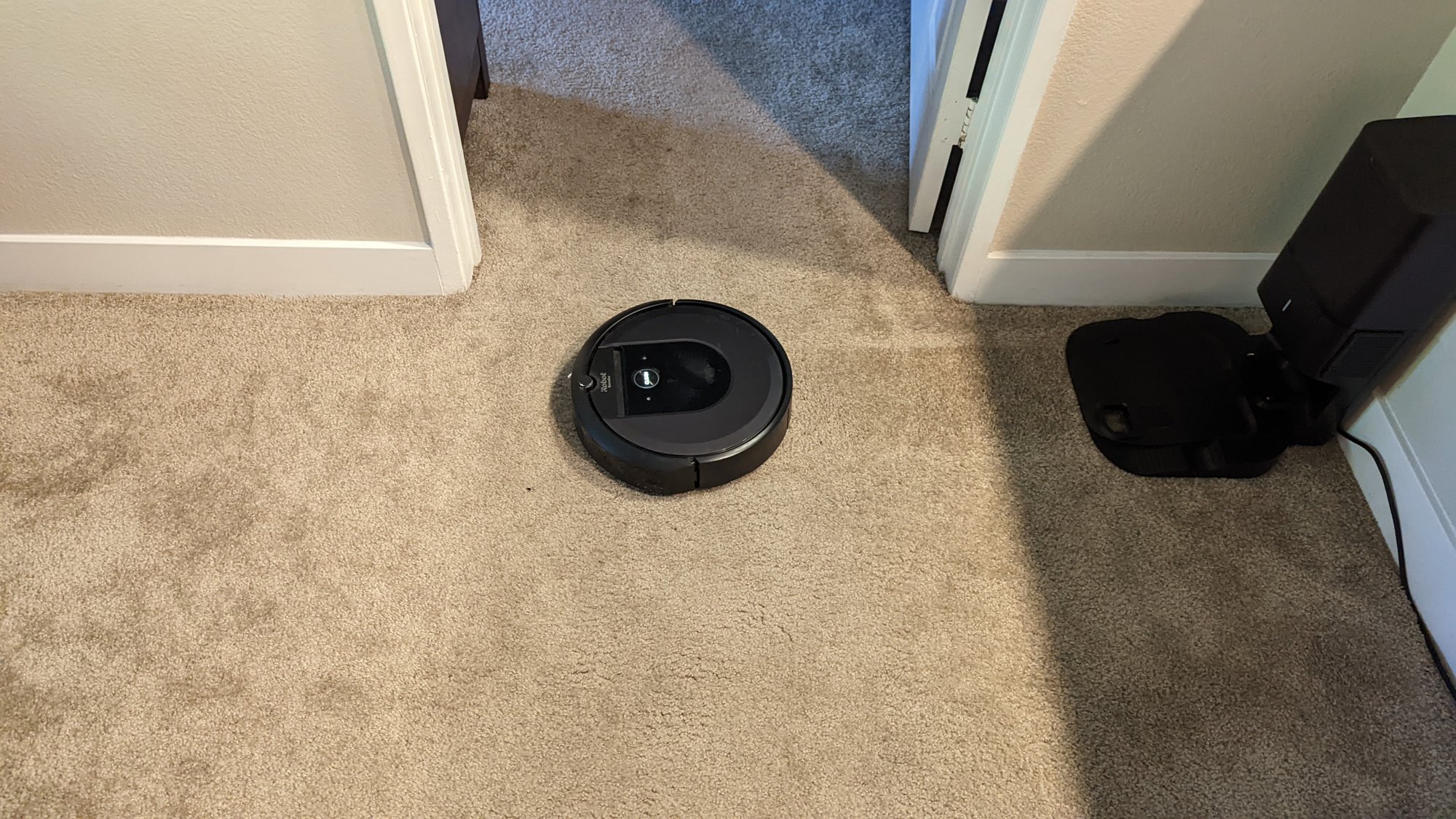
I bought an iRobot Roomba i7+ in 2021 to clean the one bedroom flat I had just moved into. It has served well since. It has moved apartments with me twice and shows up in both my 2022 and 2025 home automation posts, mostly in passing. The interesting part is that a robot with a camera, a map, and an autonomy stack gets relegated to an appliance.
What it actually does
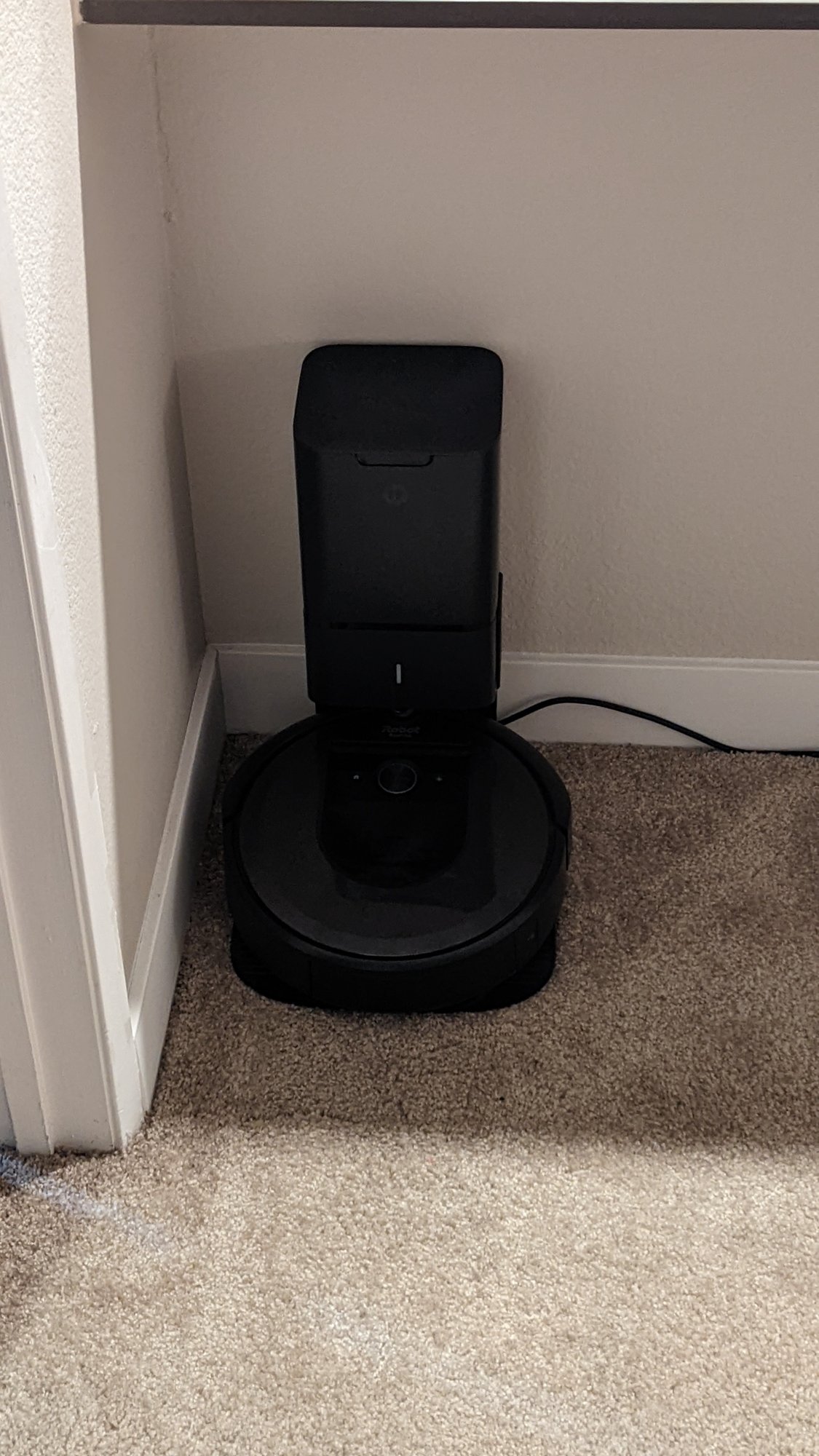
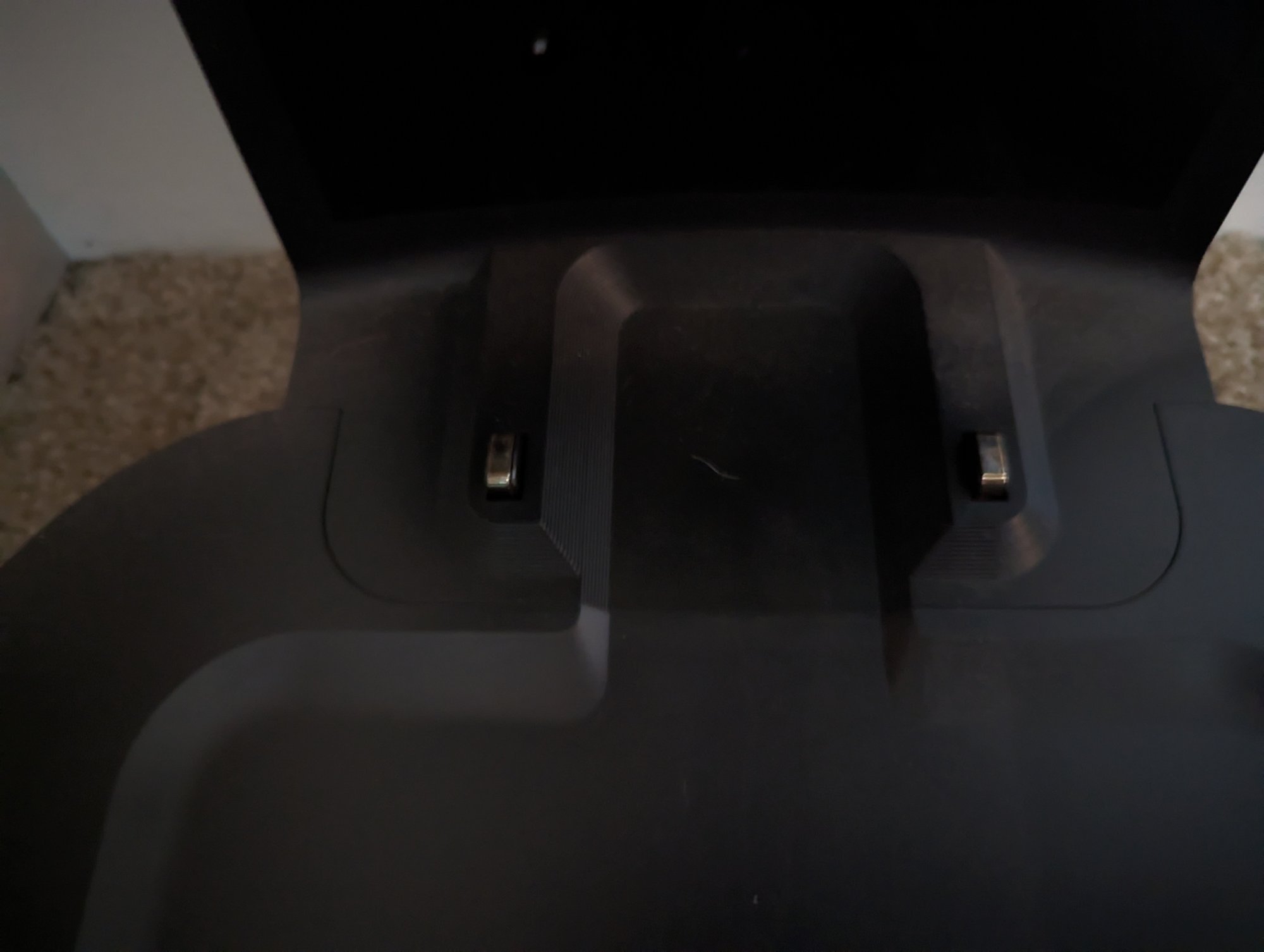
The i7+ builds a map of each floor with its camera, splits the map into rooms, and remembers them. I can say “Alexa, tell Roomba to clean the downstairs” and it picks the right map, plans a route, does the rooms, and drives itself back to the dock. The dock sucks the debris from the robot’s bin out into a bag so I only deal with dirt every month or two. If it gets stuck it complains through the app. If the battery runs low mid job it goes home, charges, and resumes where it left off (unless I had to lug it up or down the stairs, in which case it just sits and waits for me).
Under all that is the same set of behaviors every Roomba has had since 2002. Bump sensors for when it hits something. Cliff sensors under the front edge so it does not go down the stairs. Wall following. A dirt sensor that makes it linger over a spot. The map is layered on top of those reflexes. If the map is wrong, it still bumps into the wall and turns around.
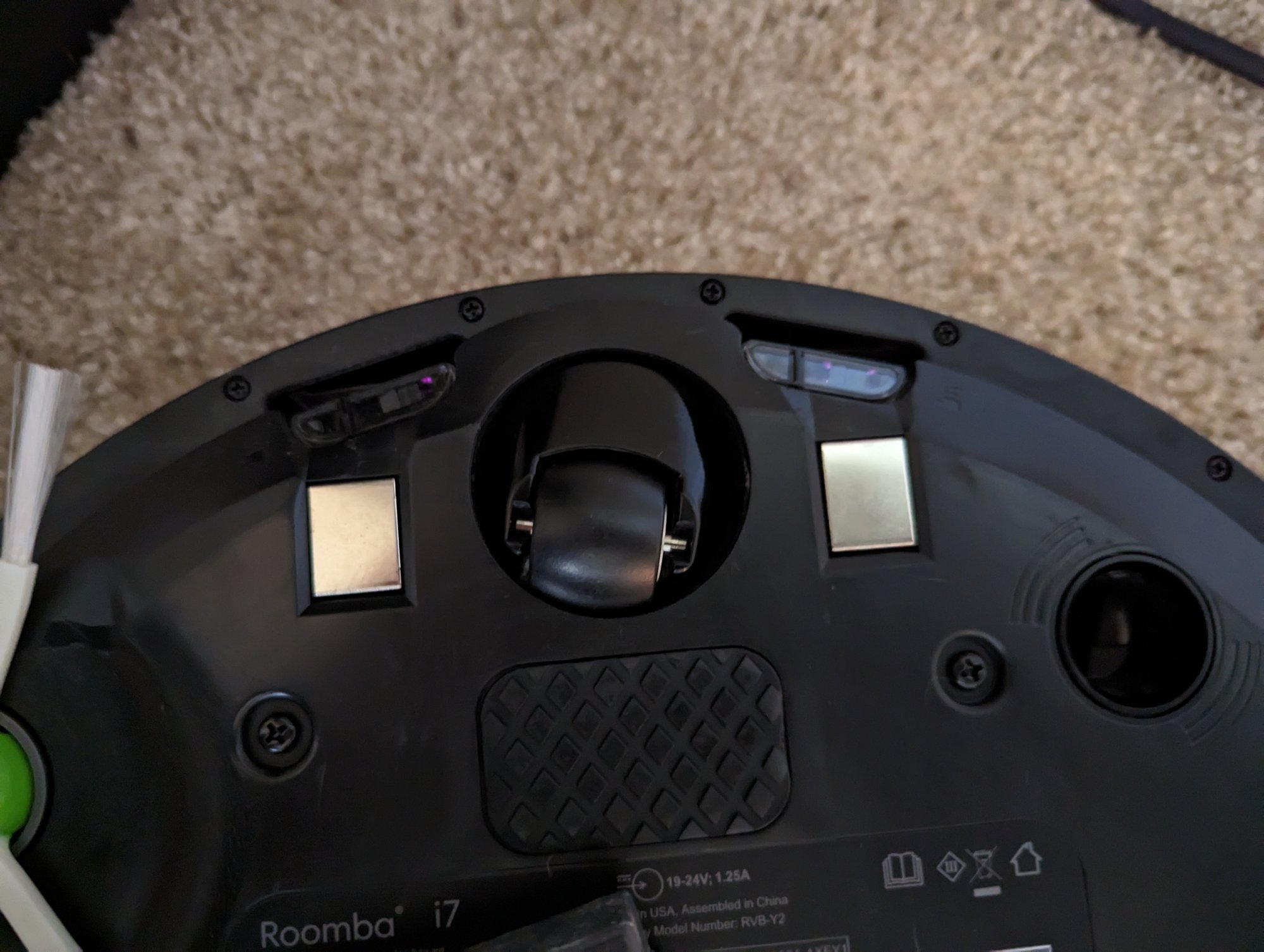
Underside in June 2023. Still the original brushes at that point.
It has needed maintenance over the years. New brushes and a filter, plus the usual hair extraction from the roller. I had to replace the rollers too after it decided to try and eat a chunk of wood. Nothing that stopped it from running. The battery is still original and lasts a floor before it needs a recharge. I have not felt the need to upgrade.
The Brooks thread
The Roomba is the most successful product to come out of Rodney Brooks’ work. Brooks co-founded iRobot in 1990 with Colin Angle and Helen Greiner. A few years before that he wrote the paper that runs through most of what I do on this blog, “A Robust Layered Control System for a Mobile Robot.”1 The idea is that you do not need a model of the world to act usefully in it. You build simple behaviors, layer them, and let the higher layers suppress the lower ones.
The original Roomba ran on exactly that. Bump, back off, turn, wander, spiral when the dirt sensor fires. No map at all. The i7 adds a map, which is the part Brooks argued you could do without. But the map only plans the route. The reflexes underneath still handle the actual driving.
My BEAM robots run on the same idea with a lot fewer transistors.
The stairs
I live in a three story house. The old place was two floors, and before that I lived in apartment flats. There is one Roomba. The cliff sensors mean it will never fall down the stairs, and they also mean it will never go up them (imagine a Roomba with legs). So I carry it. Once a week or so I hike it down to the floor that needs it, let it run, and hike it back up. The 2025 post called this “a bit of a hassle,” which was polite. Each floor has its own map, learned on the move, and I pick the floor by voice. “Alexa, tell Roomba to clean the <upstairs, main-floor, downstairs>.”
Mapping, suction, the dock, and the voice control have all improved since 2002. The stairs have not, and that is a hardware problem iRobot never solved. So I am the elevator.
iRobot the company
While I was carrying it up and down the stairs, the company that made it fell over. Amazon tried to buy iRobot in 2022 and the deal died in January 2024 under EU antitrust review. Colin Angle left the same month. Cheaper competitors ate the market from below. In December 2025 iRobot filed for Chapter 11 and in January 2026 it came out the other side owned by Picea, its Chinese contract manufacturer. The Bedford office and the engineering team stayed. The public company did not.
I do not have strong feelings about the corporate side. I have one practical worry. The map, the room selection, the Alexa skill, and the scheduling all go through iRobot’s cloud, but the Clean button on top of the robot works without it. If the servers go dark I still have a vacuum that bumps around a room, which is the 2002 product. I lose the 2021 product I paid for.
This is where I actually wish everything was hosted locally instead of delegated to the cloud. The robot has the compute. The map lives on it. There is no reason the phone and the robot could not talk over my own Wi-Fi without a round trip through Massachusetts (or wherever the servers live). Some of that already exists. dorita980 talks to the i7 over its local MQTT port, so start, stop, dock, and room cleaning work with no internet at all, and Roomba+ wraps that for Home Assistant. The catch is the map. The room IDs work locally, but the map itself and the room names come down from the cloud, and the standing advice is to block the robot’s internet access so a firmware update does not break the whole thing. A full firmware replacement like Valetudo does not exist for the i-series, and neither does a ROS driver. The closest iRobot came was the Create 3, the i3 chassis running ROS 2 with the vacuum left out.
If my Roomba becomes inoperable because someone shut off a server, I will be hacking the hardware to keep using it. I have a whole blog about doing that to lesser machines.
Baristas and vacuums
Earlier in this series I posted a UR making coffee behind glass at an outlet mall. I geeked out. Everyone in line geeked out. That robot is at the stage where being a robot is the product. People buy the coffee to watch the arm.
Nobody watches the Roomba. Well, I do, but I am a special case. It feels like everyone else treats it like a dishwasher. It got there because it does one dull job in a messy environment without asking for help, which is the whole thing Brooks was arguing for in 1986. The barista is a novelty. The vacuum stopped being one a decade ago. Such is the fate of a robot. It becomes a boring appliance.
Footnotes
-
R. A. Brooks, “A Robust Layered Control System for a Mobile Robot,” IEEE Journal on Robotics and Automation, vol. 2, no. 1, pp. 14-23, Mar. 1986. doi:10.1109/JRA.1986.1087032 ↩